
Orthotics Department
Download leaflet
Bracing for Pectus Deformities PIAG 154 (429kB)
Why has a brace been prescribed and what is my child entitled to?
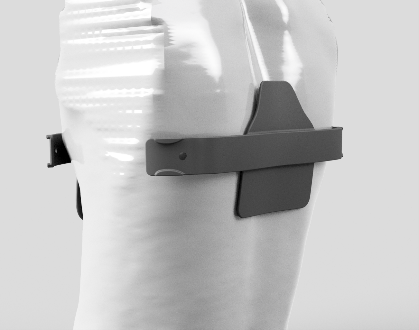
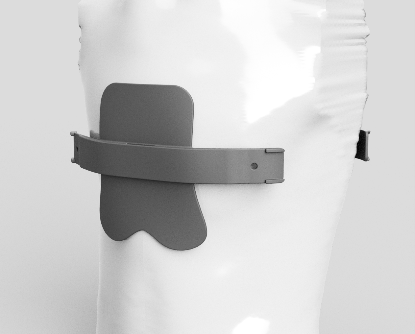
- Your child has been prescribed a brace, specifically designed for their pectus deformity.
- You will be provided with 1 brace.
- There are a range of pectus deformities i.e:
- Pectus Carinatum: This is sometimes referred to as pigeon chested due to a protruding sternum and ribs. This can lead to discomfort and/or shortness of breath.
- Pectus Excavatum: The most common congenital deformity of this kind. Abnormal growth of the ribs and sternum causes a sunken or caved-in chest.
Care of the brace
- Regularly clean the brace with mild soap and water, towel dry and keep away from direct heat sources i.e. radiator, as the material may distort.
- It is your responsibility to bring the device to the orthotics department for repairs as and when necessary, i.e. when straps or pads become worn down.
- It is also your responsibility to contact the department if the wearers condition changes or if the brace no longer fits correctly.
- You will be provided with a second brace only when the Orthotist or Technician deem it no longer clinically effective or beyond repair.
How is a brace fitted, and wearing the spinal brace.
- The Pectus brace will be fitted by one of our trained Orthotists in clinic. The Orthotic team have developed a specialist treatment plan to get the best results.
- The Orthotist will advise you on how to properly fit your child’s brace but when putting the brace on, ensure the brace is in the correct place.
- The brace is to be worn over a t-shirt to provide skin protection.
- The ratchets should be tightened symmetrically as tolerated and the ratchets then tightened further every 2-4 weeks to begin with and then tightened less often after this.
- The brace is only effective when worn for a minimum of 15 hours a day.
- For girls it is important to check the fitting of the brace to ensure that the front pad does not compress the breasts, which would affect breast development.
- When first wearing the brace, it should be worn for up to 4 hours. On the second day, this can be extended to wearing it overnight and taking it off in the morning to wash.
- Once broken in, the brace should be worn for 15-23 hours a day for 3 to 6 months or until the chest wall protrusion has flattened (correction phase).
- After this the brace should be worn for 15 hours a day for the next 3 to 6 months or until axial skeletal growth has ceased (maintenance phase).
- Maximum correction of the chest wall protrusion requires prolonged use of the brace averaging 24 months.
- The brace can be removed for the short period of time of playing sport, but the recommended wear time should still be met.
- It is recommended to wear the brace as tight as possible to achieve the best correction and positioning of the brace.
What issues do I need to be aware of?
- Potential complications including skin irritation and bruising.
- Some marking of the skin is normal. The correct pressure from the brace is easily monitored, when pressure is sufficient, skin discolouration over the chest wall protrusion persists for several hours after brace removal.
- Children do grow, sometimes frequently and rapidly, please contact the department if you feel the brace no longer fits or becomes uncomfortable for the wearer and you will be provided with a review appointment.
Contact us
If you have any problems or questions, please contact a member of
the team who will be happy to discuss them with you.
Telephone: 0151 252 5318
Email: [email protected]
This leaflet only provides general information. You must always discuss the individual treatment with the appropriate staff member. Do not rely on this leaflet alone for information about the treatment.
This information can be made available in other languages and formats if requested.
Alder Hey Children’s NHS Foundation Trust


PIAG: 154