This National Children’s Day, we’re reflecting on the challenges many children and young people face today, from poverty and mental health to inequality and life chances, and the role we can all play in creating a happier, healthier and fairer future.
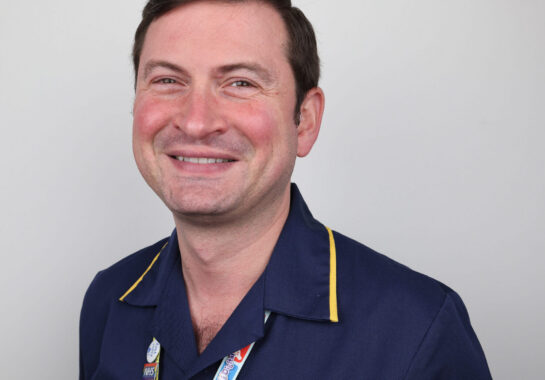
Read more from Alder Hey’s Chief Nurse, Nathan Askew, on why listening to young people, and acting on what they tell us, matters more than ever.
“On 10th May, we celebrate National Children’s Day, a time for us all to remember the importance of having the best start in life. Childhood is a special time. Our experience of the world in childhood shapes the future adults that we will become. It’s a time of learning, of wonder and of experiencing things for the first time.
However, for too many children, childhood can be a difficult and challenging time, through no fault of their own, and often through no fault of those caring for them. We know that today, 27% of children in the UK live in poverty. That’s roughly 4 million young lives affected by financial challenges. We see a rising trend of almost 1 in 4 young people aged 10 – 11 being classified as obese. Many young people are young carers, supporting adults in their lives with additional needs. Too many young people leaving care find it difficult to secure employment.
Young lives are now more complicated than ever. Social media can have strong negative impacts on young people, increasing the incidence of bullying and potentially having negative impacts on mental health. 1 in 6 children aged 7 – 16 has a probable mental health disorder, potentially a signal of how difficult childhood can be for many.
We know that over the course of childhood, young people develop physically, emotionally, and socially, preparing them for adulthood. Education is a vital element of how children formally learn and helps secure long-term career prospects. Absenteeism from education is increasing post-pandemic, possibly limiting the future potential of many. Some young people, particularly those with neurodiversity, can find education challenging. Our young people with a range of protected characteristics are also more likely to be disadvantaged.
The UN Convention on the Rights of the Child sets out clear expectations of what our children and young people have a right to, including provision for education, play and protection. However, those rights are too frequently not upheld. This National Children’s Day, it’s an important time for us to pause and reflect on how we can all contribute to improving the lives of our children and young people.
At Alder Hey, we see children, young people and their families at some of their most difficult times. The care we provide reaches far beyond the hospital, into the community and directly into people’s homes and schools. We are privileged, every day, to meet fantastic young people with so much potential in life.
We worked with our young people to identify what matters to them and to challenge us to do better. Children and young people want us to improve their life chances by advocating for them on the issues they face. Young people want to be heard, listened to and, more importantly, for action to be taken.
Young people want to be heard, listened to and, more importantly, for action to be taken.”
For example, we know our young people care deeply about climate change and its impact on the world they will grow up in. We have recently launched our Green Plan, a clear way to tackle this issue and contribute to the NHS’s ambition to be net zero by 2040.
Our young people rightly want the best treatment possible today so they can benefit from it. That’s why our research team actively seeks out new treatments, recruiting the highest number of participants in research studies for children and young people year on year, and delivering the most medication trials for children and young people. Our innovation team regularly looks at how we can do better for children and young people.
Our community nurses not only enable earlier discharge for our patients but also prevent many children and young people from needing to come into hospital. A wide range of community-based professionals support children and young people, often with complex needs, either in their homes, schools, or wider communities. We are expanding our prevention work to reduce the number of children who need our care, or who can be supported earlier, to minimise the impact on their physical and mental health.
None of this would be possible without the hard work, dedication and ambition of exceptional people. Our teams are dedicated not just to being good enough, but to constantly asking how we can be better. We focus on training the next generations of healthcare professionals, administrative and support staff, all of whom make the work we do possible.
Sadly, too many of our young people and our colleagues experience discrimination across a range of characteristics. As we move forward, we commit to increasing understanding and awareness as well as continuing to have a zero tolerance approach to managing discrimination.
We cannot do this alone. As an organisation, we must work with a wide range of partners to improve the life chances of our children and young people. We are grateful for the support we receive, but collectively we must do more.
This National Children’s Day, we not only need to celebrate our children and young people, but also to reflect on how challenging childhood can be, and the role each of us personally and professionally can play in creating the right conditions for all children to live a happier, healthier and fairer future.”