
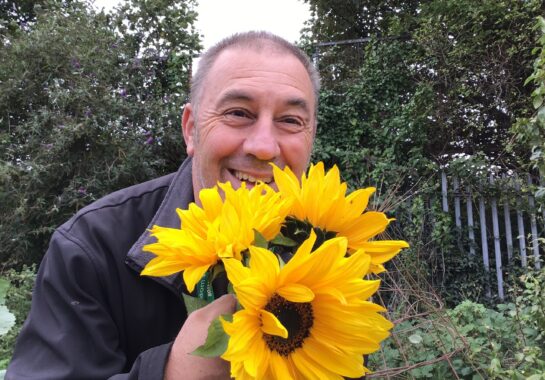
Whether it is gardening, birdwatching, making a bug hotel, or adding a water feature to a garden, more people are recognising the positive impact that being close to nature can have on how we feel.
At Alder Hey FRESH CAMHS, we have been embracing the natural world, and nature in particular, to help enhance and maintain mental health.
Nature-based therapy, and its use in supporting mental health, has a long history. Hippocrates, the Greek physician often known as the father of modern medicine, famously said: “Nature itself is the best physician.” Nurse Mary Seacole was also known for her use of herbs and plants in the holistic treatment of war victims during the Crimean War in 1855.
Within the NHS, outdoor treatments and therapies have been part of care for many different conditions and illnesses. TB hospitals often had verandas so people could recover with fresh air and green space. Large psychiatric hospitals often had extensive grounds, and sometimes farms, where staff and patients could work. Even our own modern hospital at Alder Hey sits within a public park, with views from the wards across beautiful green spaces.
The desire and need to be near nature is called biophilia. It describes our innate drive to be connected to, and part of, the natural world. Today, we often look at this as being part of nature, rather than apart from it.
I often ask: why do we bring plants indoors? I think it is because we instinctively know they are good for us. It may be their beauty, their culinary or curative value, or simply the fact that they are living things that we care for and look after.
My role in FRESH CAMHS is to deliver the Nature Well programme, developed by the Natural Academy. Through a partnership with LJMU, we are also researching its effectiveness as part of the wider CAMHS social prescribing model that we offer to young people.
We deliver Nature Well at Basecamp, our new purpose-built dome in the Shark Garden area of the hospital site. Basecamp means we are protected when the weather is poor, while still feeling connected to nature. Its wide doors slide open onto the natural surroundings, and the space also allows us to do creative craft activities using objects found outside.
The programme is based on the five ways to nature connectedness, developed by the University of Derby Nature Connectedness Research Group. These are:
- Contact
- Beauty
- Emotion
- Compassion
- Meaning
Each session is delivered in Springfield Park. Young people and parents explore each of these areas, thinking about how they might use them in their daily lives.
We start each session with a simple grounding exercise. This is a time to become present and fully engaged with our senses and thoughts, allowing us to put the stresses of the day to one side and focus on the moment we are in. This might include breath work, guided exercises, and noticing how our body is feeling.
The sessions also incorporate the three Rs of nature connection: relaxation, restoration and rejuvenation. If you think about your own experiences of nature, whether walking in the park, visiting the beach or forest at the weekend, or spending time gardening, the three Rs are often part of what you are experiencing.
When I walk in my local area in North East Wales, no matter how often I do the same route, I feel connected with nature. It gives me space to relax, feel calm and rest. I often return feeling refreshed, with a new perspective or meaning from my meandering walk.
This happened on a deeper level for me last year when I completed the North Wales Pilgrim’s Way, or Taith Pererin Gogledd Cymru. During that long journey, I experienced tremendous views, silence, historic sites, new flora and fauna, and people who welcomed me along the way with encouragement or a cup of tea in the places where I gained a stamp for my Pilgrim’s Passport.
In Springfield Park, the physical journey may be much smaller in distance, but the work we do around nature connection can still be deep and meaningful.
The first Nature Well session is about contact, and how we can experience nature through all our senses. Many of the young people we meet in CAMHS have struggles in this area. For some, this has been heightened by their experiences during Covid, which has resulted in young people finding it increasingly difficult to engage with the wider social world, whether that is school, friends or sometimes family.
Using nature to help us focus on our senses allows a young person to become more aware of how their body feels and experiences the natural world, without the demands often placed on them by the wider world. Nature is simply there. It asks nothing of us. We can use our senses to become more aware of ourselves and the world around us.
We then explore beauty. One activity we use is making a beauty loom. This is made from a Y-shaped stick, with string or wool woven across it, before finding natural objects to place within it. Looking for beauty, and noticing what interests us, helps us see how these things can make us feel. It might be the colour of something, its shape, or the memories it brings back. Nature can delight us, surprise us, and help us notice things we may otherwise have missed.
The next session focuses on emotion. Nature can act as a barometer for our feelings. When clouds gather, we might feel stormy or grumpy. A wooded area might make us feel calmer or more at peace. In this session, we often create sculptures from found natural objects and reflect on the feelings we notice, and where we feel them in our bodies.
Compassion looks at how we care for nature, and how that can help us care for ourselves and the wider world. In this session, we might make bird feeders from apples or create bug hotels. Many of the young people are very aware of rubbish in the park and will pick it up and put it in the bins. They have real concern for the planet and how it is being treated. They also understand that, if we take care of nature, it can take care of us too.
Finally, we look at what nature means to us. Nature has different meanings for everyone, but it can also have shared meaning. It may be a place of rest, beauty, connection, reflection, or simply a place to be.
This links closely with our Nature Well animation. The animation was developed with young people as a way to introduce future members to the programme and help them understand what Nature Well is all about.
Nature has its place, and we have a place in nature.
All we need to do is go outside, explore, take care of it, and allow ourselves to feel refreshed and ready to face the day. So, if you have five minutes in your day, go out and take it all in. It is free, and it is available to all.
– Carl Dutton Specialist Mental Health Practitioner