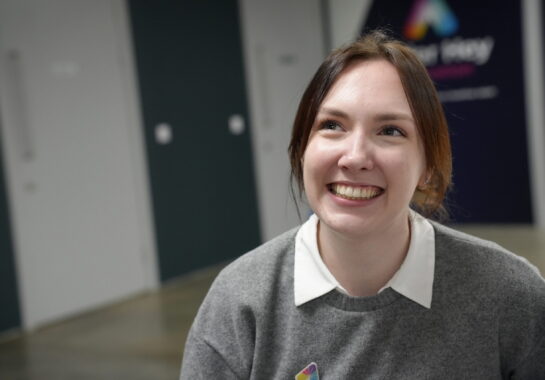
Ffion Byrne is an Innovation Clinical Fellow here at Alder Hey, working as part of the Alder Hey Innovation team.
“Hi, I’m Ffion and I’m a Clinical Innovation Fellow at Alder Hey Innovation.
Before becoming an Innovation Fellow, I experienced the NHS from a few different angles over the years. I started working as a healthcare assistant while at medical school, I then went on to complete foundation training and have recently begun paediatric training. Each stage has given me a slightly different view of how the system works.
Working in the NHS is a privilege. You see extraordinary teamwork, kindness and commitment every single day. You also see just how stretched people are. When you are on the shop floor, you quickly notice little things that could be better. Often, they are not dramatic problems, just everyday frustrations that slow people down or make their jobs harder than they needs to be.
As clinicians, we are trained to spot problems and fix them. This is what we do for patients all the time. What we are not always taught is how to fix the system around us. Quite often, you can see a solution in your head, but you have no idea who to talk to or how to move it forward.
I found this out the hard way. During out-of-hours shifts as a Foundation doctor, I noticed that the on-call junior doctors, now called resident doctors, were being bleeped constantly. We counted one weekend, and it averaged one bleep every two minutes. The bleep would go off, they would stop what they were doing, respond to the request, return to the original task and then be interrupted again. It was relentless. Everyone was trying to do the right thing, but the end result was that the most junior members of the team barely had time to complete the jobs they were being asked to do.
It did not feel like a people problem, but a system problem. I started thinking about whether an existing digital tool we were already using could be adapted to help triage bleeps more effectively. It wasn’t anything revolutionary, just a small change that might help prioritise urgent issues and reduce unnecessary interruptions. It seemed realistic and practical.
So, I tried to take it forward. What followed felt like a marathon of meetings. In each one, I was told it was a good idea. In each one, someone suggested another person or team that needed to be consulted.. I completely understand why those conversations are necessary, but as a junior member of the wider hospital team, it was difficult to navigate. Eventually, despite the initial enthusiasm, the idea quietly fizzled out and I left feeling disappointed.
That experience stuck with me, not because anyone had done anything wrong, but because it highlighted a gap. There are so many good ideas within the NHS, especially from people working on the frontline, but there is not always a clear pathway to develop them.
That is what drew me towards Alder Hey Innovation.
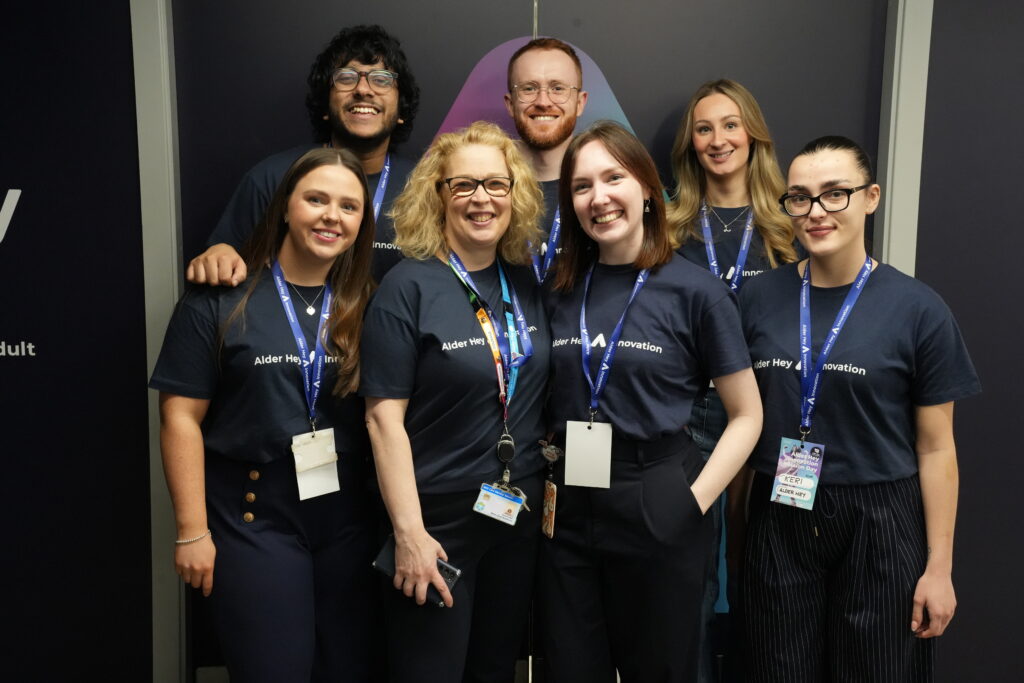
What I love about working in this space is how close we are to the hospital. We are not sitting in a distant office trying to dream up abstract solutions. We are surrounded by real clinical problems and real people who want to make things better. When someone comes to us with an idea, we can bring the right people together from the start and explore it properly.
One of the biggest things I have learnt during my time with Innovation is that the NHS and industry often speak very different languages. Both sides essential, but without someone bridging the gap, it can feel like two parallel conversations.
That is where I see my role. Because I am still working clinically as a paediatric trainee, I understand the day-to-day reality of hospital life. I know what it feels like to juggle bleeps, clinics, paperwork and anxious families. When an industry partner is trying to understand a problem, I can explain the context behind it. I can describe what is happening on the ward at 3 am and which factors are most relevant, not just what the process looks like on paper.
At the same time, I can help clinicians and hospital staff feel more comfortable stepping into the innovation world. It can be intimidating. There is talk of intellectual property, funding streams and commercial models, which are not things most of us learnt during training. I enjoy helping colleagues realise that they do not need to have all the answers. Their insight into the problem is often the most valuable piece of the puzzle.
I sometimes describe myself as a translator. I translate clinical complexity into something our corporate partners can understand, and I translate innovation processes into something that feels accessible for clinicians. It is not about simplifying things too much, but about making sure everyone feels heard and understood.
What makes this especially meaningful for me is remembering how it felt when my own idea went nowhere. I do not want other doctors, nurses or allied health professionals to feel that same frustration. If someone spots a way to improve patient care or staff wellbeing, there should be a clear and supportive route to explore it.
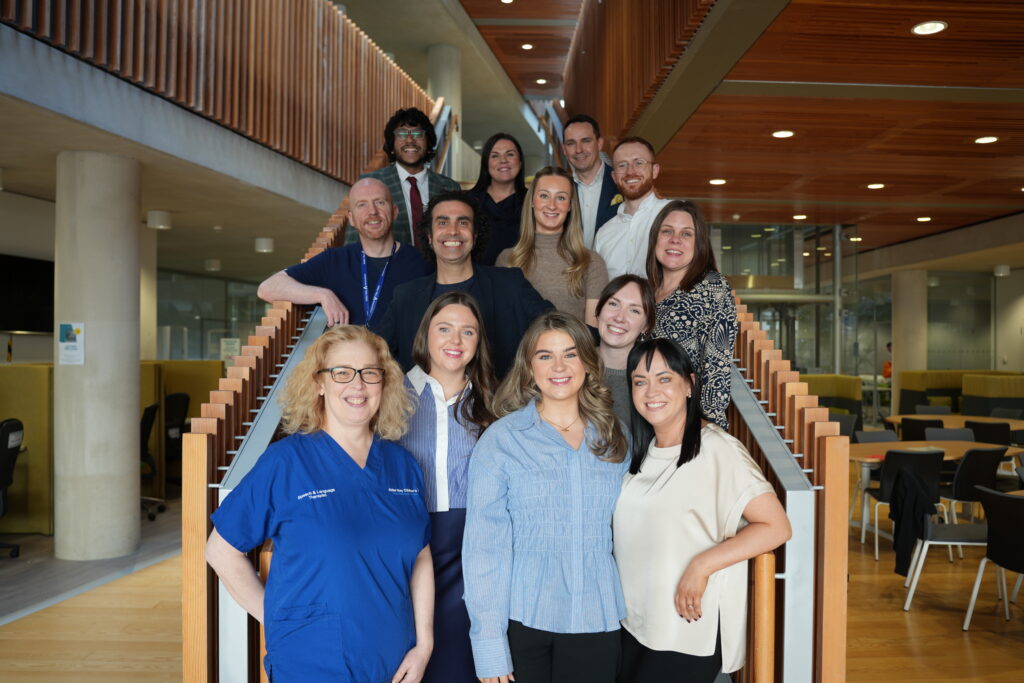
Being part of this team has shown me what is possible when clinical insight and innovation expertise sit side by side. Instead of ideas bouncing around between departments, we can work together from the beginning. We can test, refine and develop concepts with the right support in place. That increases the chances that something will move beyond a good conversation and become a real solution.
For me, this role is about connection. It is about connecting frontline experience with practical change. It is about making sure that the realities of hospital life are properly understood when new solutions are being developed. Most importantly, it is about keeping the children, young people and families at the centre of everything we do.
If there is one thing I have learnt, it is that good ideas are everywhere in the NHS. They just need the right environment to grow. Being part of that environment, and helping others navigate it, is something I am genuinely proud of.
At Alder Hey, we want to make sure no good idea gets lost along the way. If you’ve ever spotted something that could be better, we’d love to hear from you, because those ideas are where real change begins.”
Ffion.