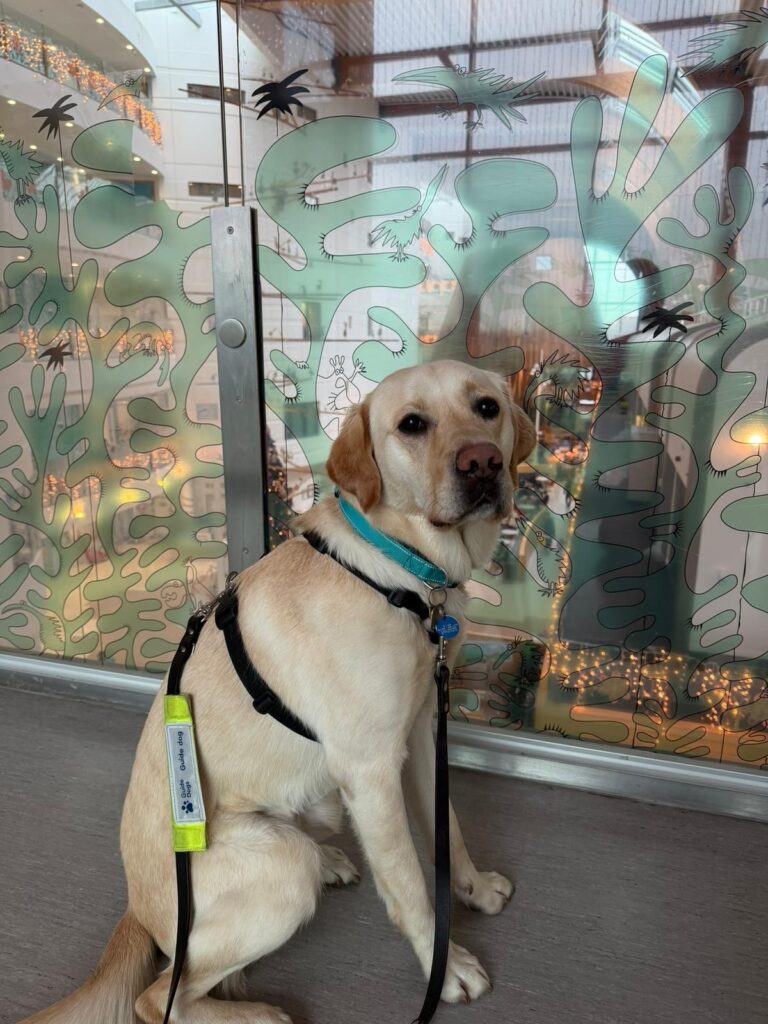
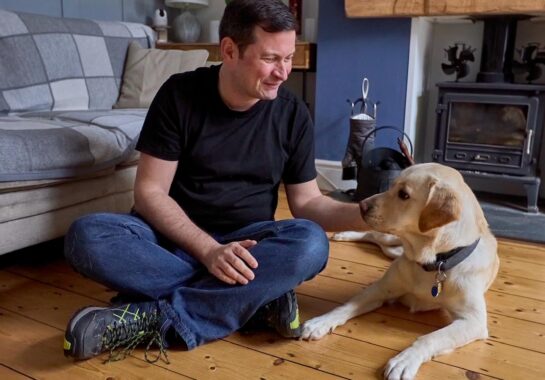
Meet Alder Hey’s Chief Nursing, AHP and Experience Officer, Nathan Askew, who lives with his own sight condition and volunteers with Guide Dogs UK to support people with visual impairments.
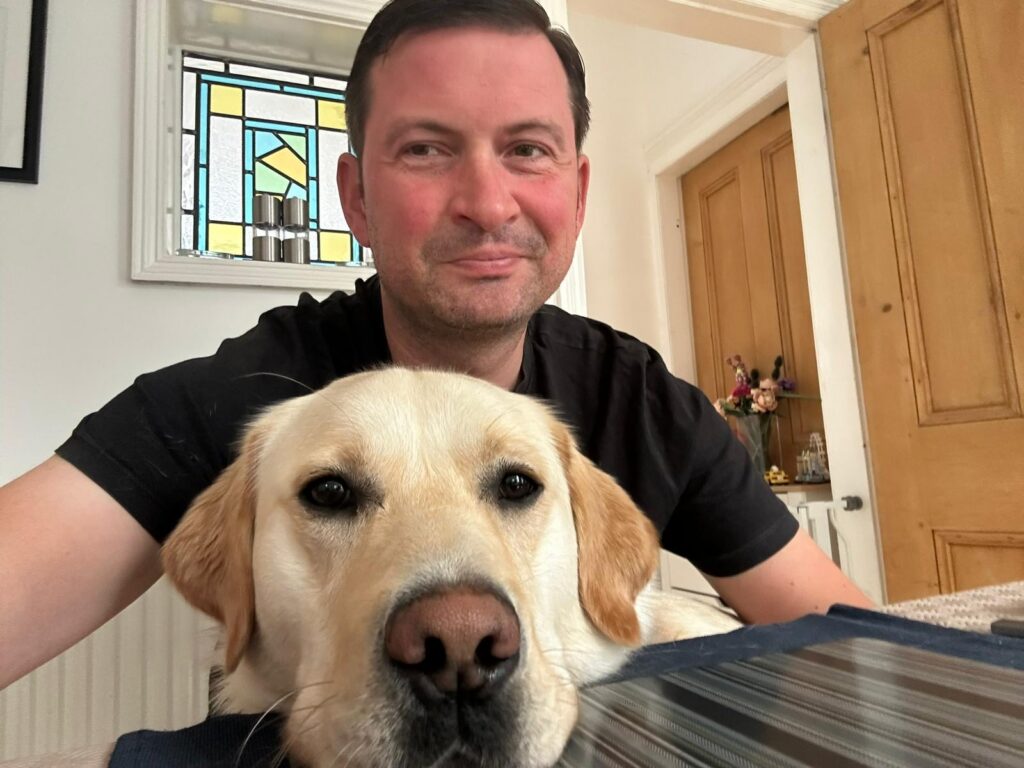
Nathan began fostering with the charity after relocating from London to Liverpool during the height of the COVID-19 pandemic. Living alone and working in an intense, caring role, he was looking for both purpose and companionship but knew he couldn’t commit to owning a dog full time. Discovering the opportunity to foster guide dogs in training proved to be the perfect solution.
“I was feeling lonely and looking for something meaningful to fill my spare time,” Nathan explains. “Finding out there was a Guide Dogs training school just a five-minute walk from work felt too good to be true.”
Since then, Nathan has fostered three trainee guide dogs, Bo, Pepper and Victor, helping prepare them for their future roles supporting people with visual impairments. Two weeks ago he welcomed his new dog, Westley.
Fostering has not only supported Nathan’s own wellbeing but has also allowed him to help dogs adjust during their training. “When Victor first arrived, he would bark all night because he didn’t want to be on his own. He wouldn’t walk either. We had to take everything step by step, I’d encourage him, saying ‘we’ve got this’.”
Through patience, routine and reassurance, Victor gradually grew in confidence. “Now when I pick him up from training, he’s full of energy, wagging his tail constantly. You can see how happy he is, it’s amazing to be part of that journey.” Victor has since been successfully matched with his new owner following their partnership in February.
Balancing fostering alongside a demanding leadership role, Nathan says it brings valuable structure and perspective to his life. “My work can be intense, but fostering works so well alongside it. It gets you out of the house, even when it’s raining, and at the end of the day, there’s nothing a towel or a wash down can’t sort out. It’s had such a positive impact on my life.”
Nathan’s commitment is also deeply personal. He lives with nystagmus, a genetic eye condition that affects vision, and has seen first-hand how sight loss can impact daily life. Unable to drive, he relies on public transport and adapts using tools such as enlarged fonts and workplace adjustments.
Several members of Nathan’s family, including his grandfather, mother and younger brother, are also affected by the condition. “My younger brother was most affected. Watching him struggle in mainstream school and then seeing how specialist support changed things for him, really stayed with me.” His brother went on to attend a specialist school for the blind, where he thrived, gaining qualifications and maintaining employment.
These experiences make the impact of guide dogs especially meaningful. “It always makes me emotional seeing the difference these dogs make. Watching Bo, the first dog I fostered, now working with his owner Neil is incredible, the independence it gives him is life-changing.”
Outside of training hours, Nathan focuses on giving the dogs a calm and supportive home environment while exposing them to everyday experiences. “The dogs train during the day, so evenings and weekends are about real life, going to the pub, theatre or out on walks.”
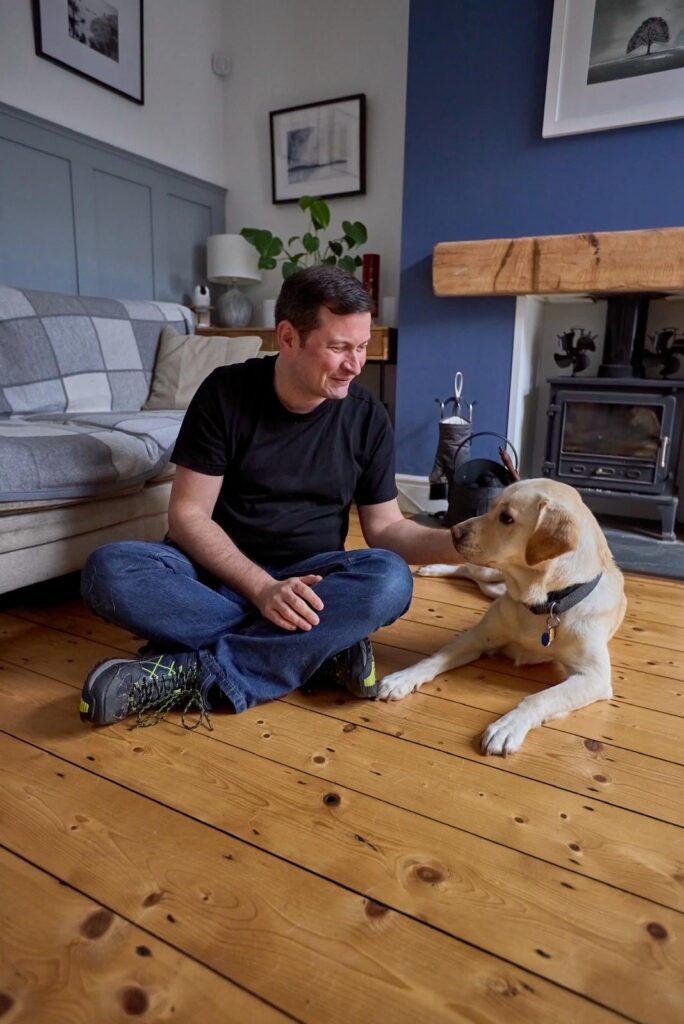
He adds: “They’re far from perfect, they’ll still try to steal your slippers or jump on the sofa, but that’s all part of it. It’s about helping them grow.”
Nathan remains in touch with Bo and his owner, who live nearby. “We meet up for walks, and it’s amazing to see how far he’s come. That bond between a guide dog and their owner, it’s extraordinary.”
For Nathan, it’s often the quieter moments that matter most. “Every night, I sit with the dogs and tell them: you are kind, you are important, you are loved. I like to think it helps prepare them for the world.” This simple routine helps the dogs settle and unwind after busy training days.
What began as a way to cope with loneliness has grown into something far more meaningful. Nathan hopes his story will encourage others to consider fostering.
“You don’t have to change your whole life to make a difference. If you can offer time, patience and a bit of love, it’s one of the most rewarding things you can do. Knowing you’ve played a small part in something life-changing is incredibly special.”